
An anal fissure is a small tear in the delicate lining of the anal canal. It is one of the most common — and most painful — conditions seen in a proctology clinic. Many people suffer silently for weeks, often mistaking it for piles. The good news: most fissures heal well with the right treatment.
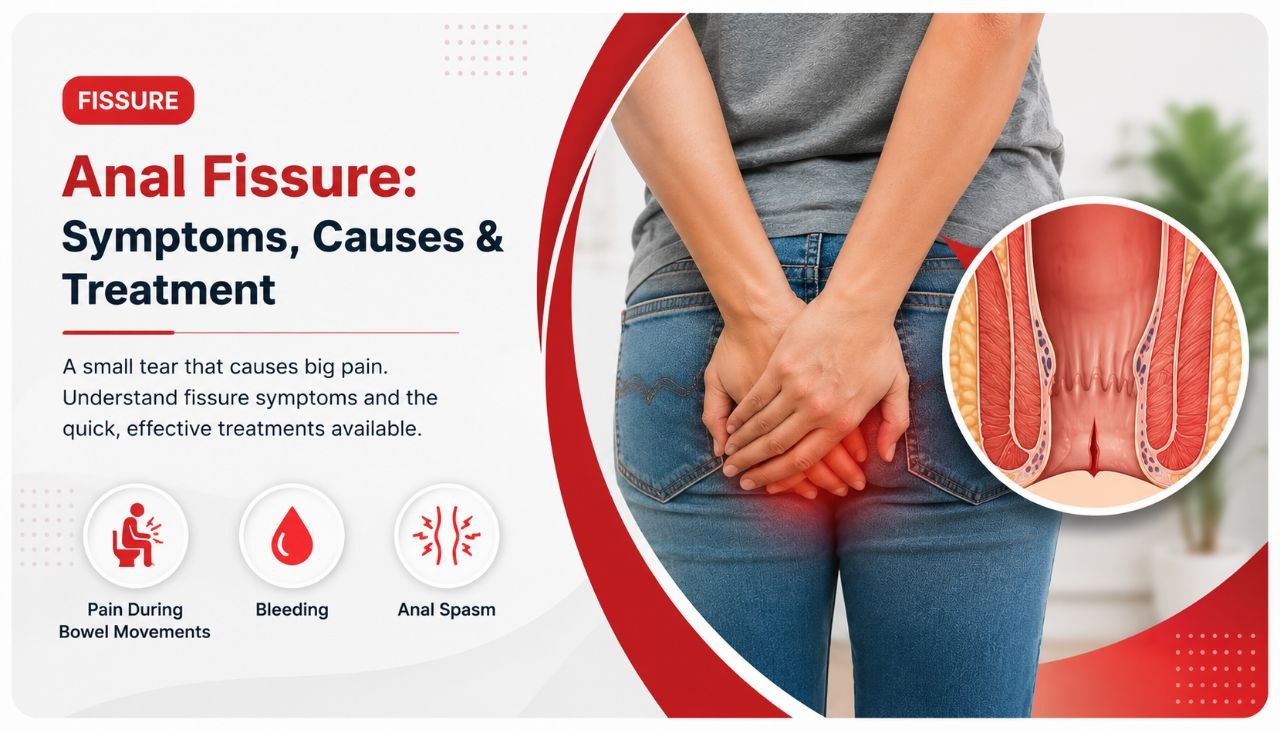
What is an anal fissure?
A fissure is a crack or tear in the skin of the anal canal. Because the area is constantly in use — and rich in nerve endings — even a small tear can cause sharp pain. Fissures can be:
- Acute — present for less than 6 weeks, usually heals with simple care.
- Chronic — lasting longer, often needing active treatment.
Symptoms of an anal fissure
- Sharp, tearing pain during and after passing stool.
- Bright red blood on the toilet paper, a few drops at a time.
- Burning or stinging that continues for hours after a bowel movement.
- Painful spasm of the anal muscles (the reason the pain lingers).
- Occasional itching or a visible tear.
Note: fissure pain is often intense — much more so than piles. If the pain and bleeding repeat with every stool, get examined early.
What causes fissures?
- Hard stool from constipation — passing it tears the lining.
- Repeated or prolonged straining.
- Chronic diarrhoea and frequent loose stools.
- Childbirth.
- Muscle spasm that reduces blood flow to the area and slows healing.
Treatment for fissures
Initial measures
- High-fibre diet, plenty of water and stool softeners.
- Warm sitz baths 2–3 times a day to relax the sphincter.
- Topical soothing and healing creams.
When simple care is not enough
- Medical therapy — medications that relax the anal muscle and improve blood flow.
- Minimally invasive procedures — to relieve the spasm so the tear can heal.
- Sphincter-sparing surgery — for chronic or recurring fissures, designed to avoid long-term effects.
A chronic fissure usually does not heal on its own. Waiting too long only prolongs the pain — treatment is generally quick and very effective.
Prevention tips
- Never delay or strain during a bowel movement.
- Keep stools soft with fibre and water.
- Avoid sitting on the toilet for long periods.
- Stay active to keep the bowel regular.
When to see a specialist
If you have had fissure-like pain or bleeding for more than 2–3 weeks, or if symptoms keep returning, a proctology consultation is important. Early treatment is simpler, faster and far less painful.