
An anal fistula is an abnormal tunnel that forms between the anal canal or rectum and the skin near the anus. It almost always follows a previous anal abscess that did not heal completely. Fistulas do not heal on their own and, in most cases, need a surgical procedure — antibiotics alone are rarely enough.
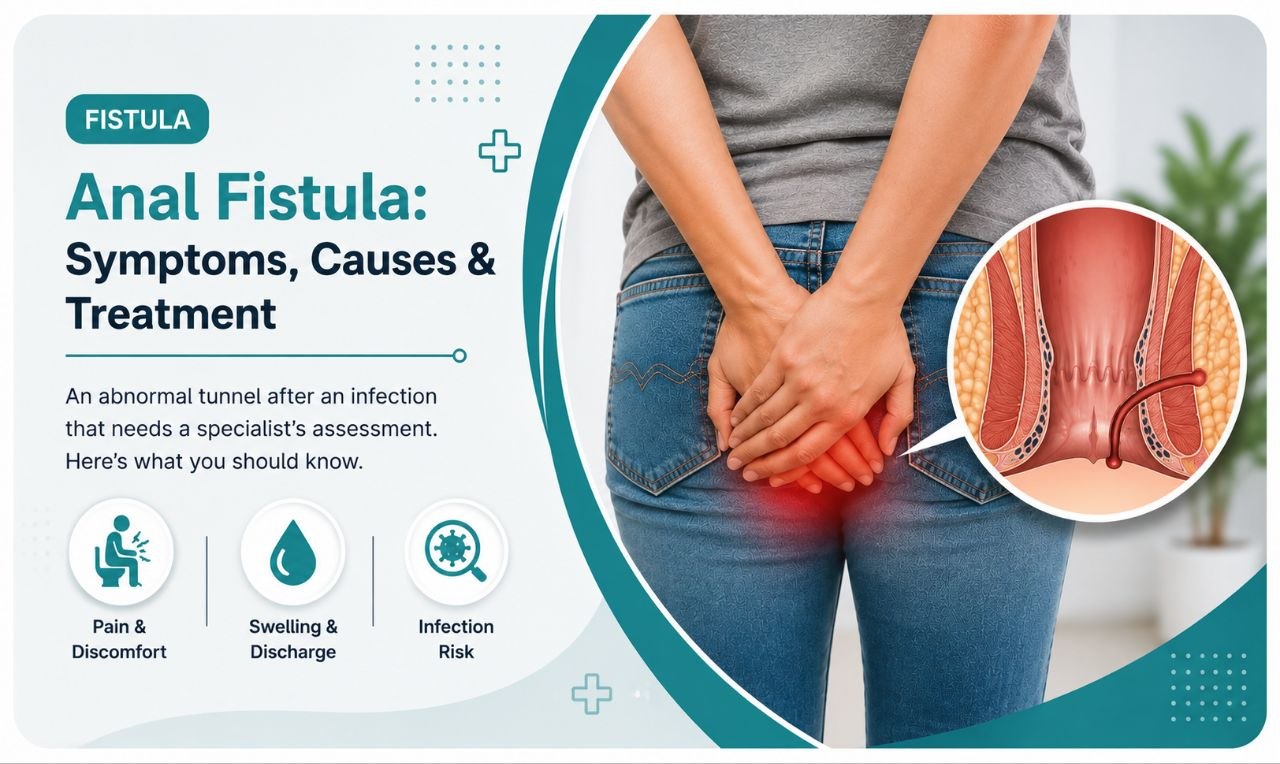
What is an anal fistula?
When an anal gland gets infected, it can collect pus and form an abscess. If that abscess bursts or is drained but the gland keeps draining, a small tunnel (a fistula) can form. The tunnel keeps an infection track open, which is why the problem tends to recur. Fistulas can be described by their position and complexity:
- Low versus high — depending on how much of the sphincter muscle the tunnel involves.
- Simple versus complex — a simple fistula has one straight track, while a complex one may have multiple tracks, branches or deeper involvement.
Symptoms of an anal fistula
- Repeated discharge of pus, blood or foul-smelling fluid from the skin near the anus.
- A tender swelling or lump that becomes painful, especially when infected.
- Itching and irritation around the anal area.
- Recurrent abscesses that keep forming in the same spot.
- Occasional fever or general feeling of being unwell when the fistula flares up.
What causes a fistula?
- An anorectal abscess that was not fully treated or did not close completely.
- Crohn's disease and other inflammatory bowel conditions.
- In India, tuberculosis (TB) is a relevant cause of fistulas and should always be considered.
- Previous surgery or trauma in the anal region.
- Sometimes no specific cause is found.
Treatment for a fistula
Why antibiotics are not enough
Antibiotics can control the infection temporarily, but they do not close the tunnel. As long as the tract stays open, the problem will keep coming back. That is why a fistula is treated surgically.
Surgical options
- Fistulotomy — opening the track along its whole length so it heals from the base; best suited for most low and simple fistulas.
- Seton placement — a thread kept in place for high or complex fistulas to drain the infection gradually and protect the sphincter muscle.
- Fistulectomy — removal of the entire track; used selectively depending on the fistula's position.
- Sphincter-sparing techniques — modern procedures designed to treat the fistula while preserving the muscle, reducing the risk of long-term effects on continence.
The most important step is an accurate examination — an MRI or other imaging is often used to map the track so the right procedure is chosen the first time.
Why early treatment matters
The longer a fistula is left untreated, the more the track can branch and involve the sphincter muscle, which makes surgery more complex and the recovery longer. Treating it early, while the track is still simple, usually gives the best outcome.
When to see a specialist
See a proctologist if you notice repeated discharge, swelling or pain near the anus, especially after an abscess. A proper examination determines whether a fistula is present and which treatment suits you best.