
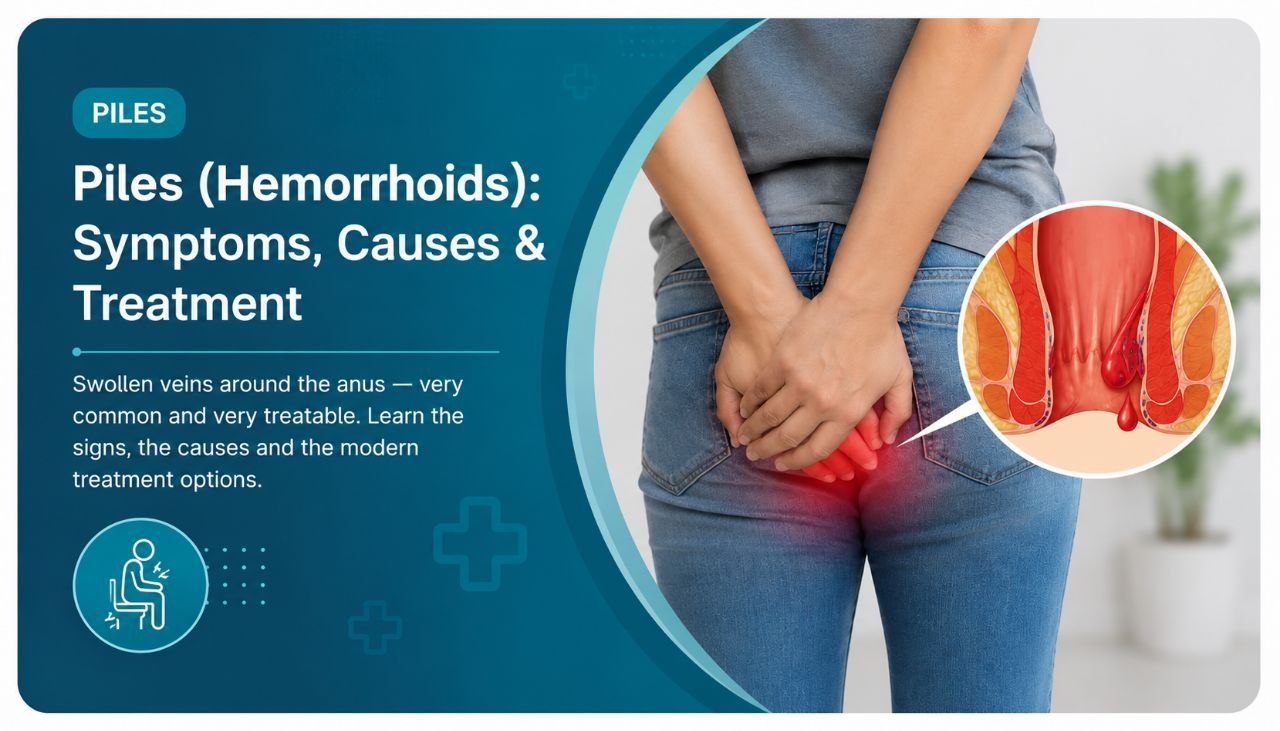
Piles — medically called hemorrhoids — are swollen, inflamed veins in and around the anus and lower rectum. They are extremely common: many people develop piles at some point in life. The good news is that with early diagnosis, most piles can be treated with simple measures or minimally invasive procedures, without major surgery.
What are piles?
Hemorrhoids are cushions of tissue containing blood vessels that lie just inside the anal canal. When these cushions become enlarged, inflamed or prolapsed, they cause the symptoms we call piles. They are classified as:
- Internal piles — inside the rectum, usually painless, may bleed or protrude.
- External piles — under the skin around the anus, can be itchy or painful, especially with a clot.
- Grade 1–4 — grading describes how far internal piles have progressed or prolapsed.
Common symptoms of piles
- Bright red bleeding during or after a bowel movement (on paper or in the toilet).
- Itching, irritation or soreness around the anus.
- A lump or swelling near the anus.
- Pain or discomfort, especially during or after passing stool.
- A feeling of incomplete evacuation.
What causes piles?
Increased pressure on the veins around the anus is the main trigger. Common contributing factors include:
- Constipation and straining during bowel movements.
- Prolonged sitting, especially on the toilet.
- Low-fibre diet and not drinking enough water.
- Pregnancy and childbirth.
- Obesity, age and a family history of piles.
- Lifting heavy weights repeatedly.
Home care and prevention
For mild piles, these habits help a lot:
- Eat more fibre: fruits, vegetables, whole grains, dal and salads.
- Drink 2.5–3 litres of water daily.
- Avoid straining; don’t sit on the toilet for more than 5–10 minutes.
- Use warm sitz baths to soothe discomfort.
- Stay active; avoid sitting continuously for long hours.
Treatment options for piles
Non-surgical and office-based treatments
- Lifestyle and dietary changes with stool softeners.
- Rubber band ligation — a small band is placed on the pile to cut off its blood supply.
- Injection (sclerotherapy) for early internal piles.
Minimally invasive and surgical options
- Stapled hemorrhoidopexy — less pain and quicker recovery for prolapsed piles.
- Laser-assisted treatment — precise, minimal bleeding, faster return to routine.
- Classical hemorrhoidectomy — reserved for large, complex piles.
The right treatment depends on the grade of piles, your symptoms and overall health. A specialist consultation decides this — not guesswork from the internet.
When should you see a doctor?
See a piles specialist if bleeding, pain or a lump continues for more than a few days, if symptoms worsen, or if you notice significant bleeding or weakness. Early treatment is simpler, quicker and far more comfortable.